When I started teaching, mentioning cognitive science in the staffroom would have earned you bewildered looks. Today, no conversation is complete without reference to retrieval practice, cognitive load or schema theory. But there is something odd about the cognitive science that’s invaded schools. Whereas natural science has transformed the way we live, cognitive science hasn’t changed much about how we teach – teachers transmit knowledge and students do routine practice, just as they’ve always done. Why?
I think cognitive science has become victim to the ‘Telephone’ game, otherwise known as ‘Chinese Whispers’. You know, as a message is passed from person to person, details get lost and the final message is often amusingly different to the original. Similarly, the original findings of cognitive science have had to pass from one scientist to another, to an author, then perhaps to a blogger and finally a Head. Each filters the message they hear through their experience and ideology. Thus the classroom version of cognitive science – let’s call it ‘Cog-Sci’ – is simplified and distorted from the original, and unfortunately may make learning worse not better.
1. Brains on sticks
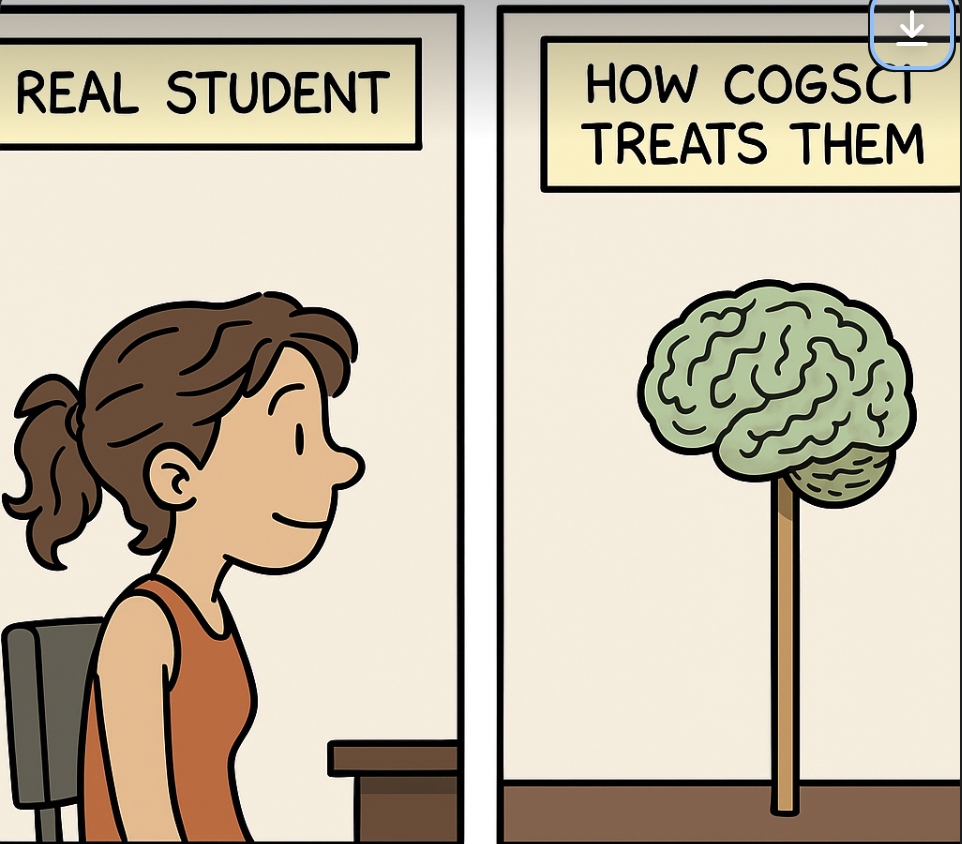
A typical Cog-Sci lesson might involve a ‘do it now’ task, a bit of retrieval practice and then straight into a new concept. In other words, it treats students as information processing machines – brains on sticks.
But we all know that humans are more emotional than reasoning creatures. And the research backs this up – ‘non-cognitive factors’ account for around 50% of achievement. Students need to be engaged so they pay attention and put effort into the hard mental work of understanding.
If you look into the science education literature, you’ll find strong arguments for starting a lesson by creating mystery or surprise. This leads students to ask questions whose answers are the learning objectives of the lesson.
For instance, when we teach density in our Proper Science KS3 course, we start by getting students to try magic tricks based on floating and sinking, and then wondering how they work.
2. A theory too far
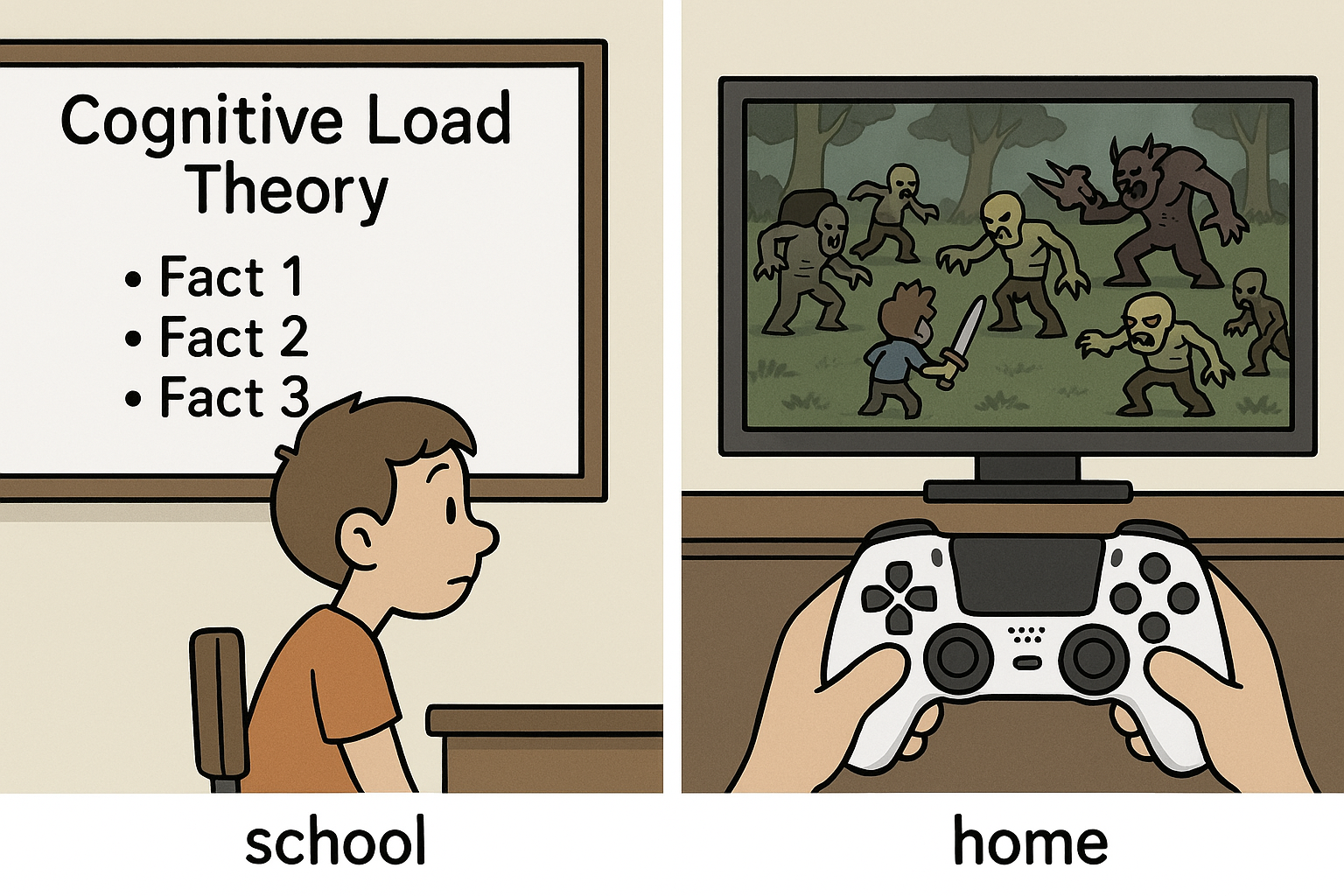
Cognitive Load Theory is a wonderful tool for designing effective slides and explanations, to avoid overloading students’ limited working memories with excessive information. The problem is that Cog-Sci has put CLT on a pedestal – ‘the most important thing teachers need to know’, according to Dylan Wiliam.
So you’ll find people using CLT to justify strategies like using direct instruction all the time and giving students little to figure out themselves. The previous Secretary of Education claimed that because of CLT, students were incapable of inquiring like scientists. Oddly, in the USA, this is exactly how students work in science – integrating practices with content. Perhaps Americans have bigger working memories than our students?
A particularly useful but not well known finding, ‘Time for telling’ (Bransford and Schwartz), can help to solve the dilemma. It says that after you teach the basic facts, and before you give students the abstract idea, let them gain concrete experience of the phenomenon. This ensures they have an embodied and visual representation, which you build on to help them make sense of the concept.
So in the density topic of our course, students do an activity to explore the idea of ‘crowdedness’ – how much matter is in a given space – because this is the key challenge of the density concept – it’s a ratio of mass to volume.
3. Memory is not enough
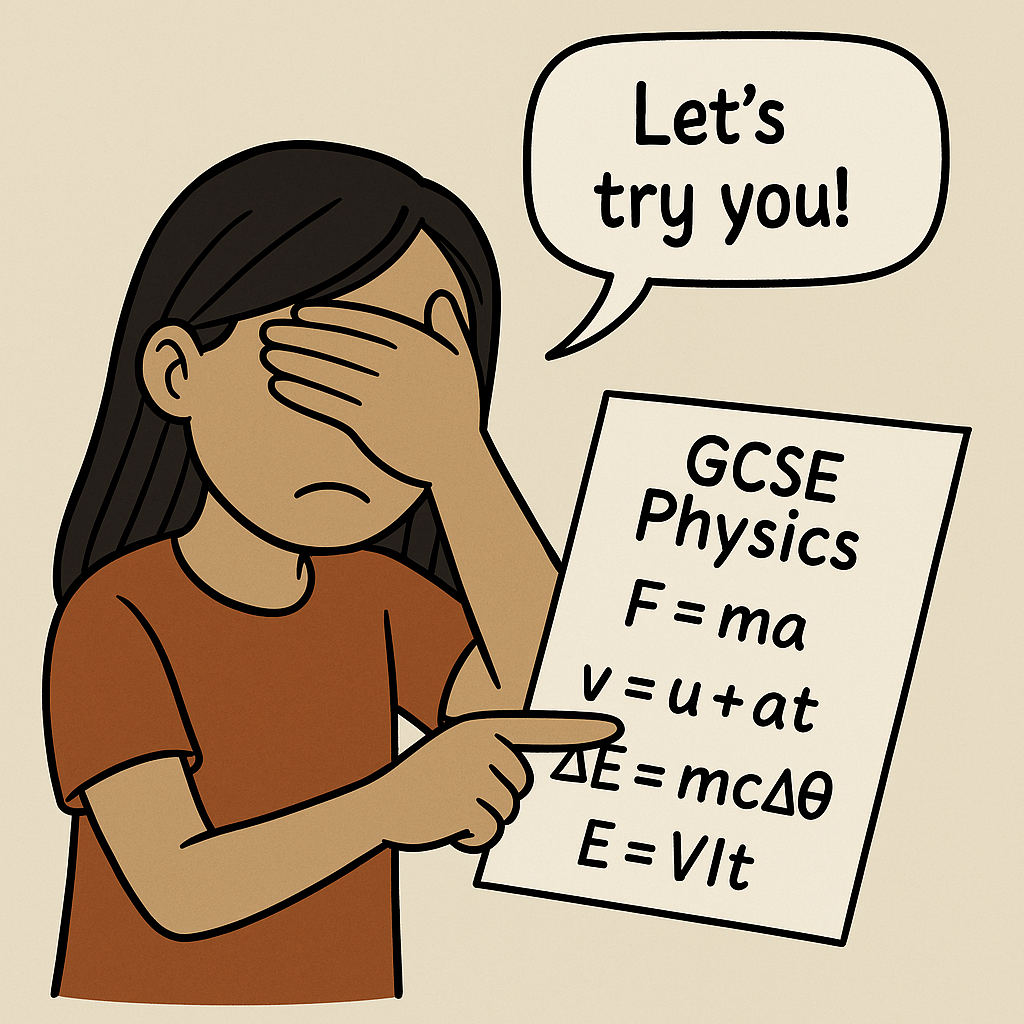
Cognitive scientists have reminded us for decades that the acid test of learning is transfer – whether you can use what you know in a different situation. Transfer is hard, yet Cog-Sci lessons topics often provide little help with it, hoping that ‘strong schema’ are enough.
A more in-depth view of the novice-expert research on which the notion of schema is based, reveals that experts organise their knowledge around problem-solving. Cognitive scientists found that while the best physics students learn to see the deep features of a problem situation, most students only look at the superficial ones – which is why they can’t recognise which equation to use.
Teaching for transfer can help this. It includes giving students problems to solve right from the start, so they learn to see how deep features of the concept connect with elements of the problem situation.
So in our density topic, students start by trying to explain the tricks – which they can’t. No matter, there’s still a learning benefit -it’s called ‘productive failure’. Once they learn the concept they will see it as a tool for explaining phenomena, and in the later Apply and Analyse stages of the unit they progress to complex problem solving.
What’s the take-away message? The bad news is that the only way to avoid the over-simplified and distorted Cog-Sci is to read the original cognitive science findings. The good news is A.I. can summarise and interrogate the papers for you.
And if you get irritated when someone drones on about how their lessons are based on cognitive load theory, you can always use the put down from Ben Goldacre (Mr Bad Science):
‘I think you’ll find it’s a bit more complicated than that’.
 Practising Science: Tony Sherborne's blog
Leave a comment